
Quick Summary
In the UAE, a classic car must be over 30 years old and pass an RTA inspection. Restoration covers documenting the car, rust repair, a mechanical overhaul and paint in the original colour. Tyres over 60 months old fail the RTA classic check. Shaded storage and regular drives protect the finished car from heat.
A classic car in the UAE has survived decades of heat, sand and salty air. Bringing it back to life takes far more than fresh paint.
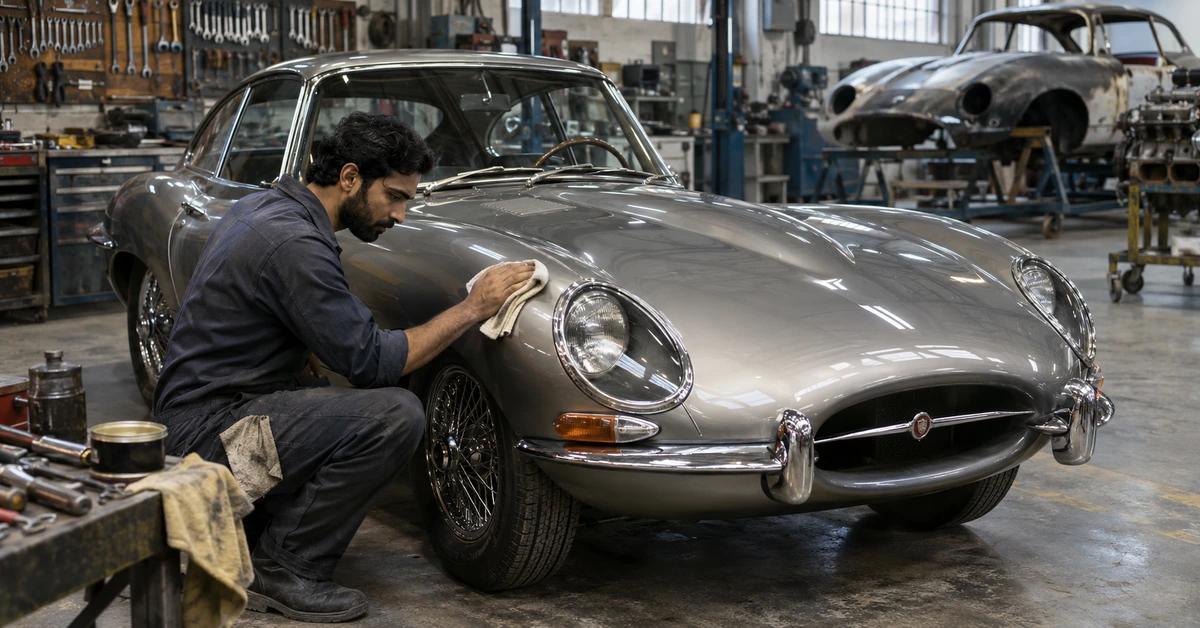
Classic car restoration in the UAE starts with the rules: a car must be over 30 years old and pass an RTA classic inspection to wear classic plates. From there, the work covers documenting the car, rust repair, a mechanical overhaul, paint in the original colour and careful parts sourcing. Planning for heat, humidity and storage keeps the finished car from sliding back.
The Rules That Shape a UAE Restoration
In Dubai, a car must be more than 30 years old and meet technical testing requirements to count as a classic. Approved cars can carry plates styled on Dubai's 1980s designs, a scheme announced by the Dubai Media Office in 2020.
The 30-year window rolls forward every January. A car that is too young today may qualify after the next year turns.
Classic registration in Dubai has two main uses: road use, renewed yearly, and exhibition only, which allows display but not road driving. Road use costs around AED 400 for a year, while exhibition registration runs about AED 1,100 for three years.
| Classic registration item | Typical detail |
|---|---|
| Minimum age | More than 30 years |
| Road use registration | About AED 400 for 1 year, about AED 350 to renew |
| Exhibition only registration | About AED 1,100 for 3 years |
| Classic technical inspection | About AED 420 plus a AED 20 fee |
| Classic plate | About AED 150 |
| Tyre rule | Fail if over 60 months from production, badly worn or cut |
What the RTA Classic Inspection Checks
The classic check focuses on safety rather than showroom shine. Its six core items centre on things like brakes, lights, steering, tyres and leaks, which matter more than perfect chrome.
Tyres catch many owners out. The RTA fails tyres more than 60 months past their production date, as well as tyres that are badly worn or cut, even when the tread looks deep.
Fuel, oil and coolant leaks are another common failure point. Fixing them before the test saves a second visit.
Step-by-Step Restoration Process
Document the Car First
Every good restoration starts with a record of the car as it stands. That means the chassis and engine numbers, the paint code and photos of each panel.
This record protects the car's history and value. It also helps match original colours and parts later.
Inspect the Underside
Next, the car goes on a lift so the floor, sills, chassis rails, brake lines and fuel lines can be checked. This is where hidden rust and old repairs show up.
Coastal steel can corrode about 5.6 times faster than inland steel, so Gulf-coast classics need close attention. Preventing rust and corrosion after the work is just as important as repairing it.
Rust Repair and Bodywork
Rotten metal is cut out and replaced with new steel sections. Bare steel is then primed and welded seams sealed before any paint goes on.
Paint is refinished in a colour mixed from the recorded code. Getting the paint match right keeps the car authentic and protects its value.
Mechanical Overhaul
Engines that sat for years need fresh oil and coolant in the grades the maker lists. Fuel systems are cleaned after a long lay-up, since old fuel turns to varnish.
Brakes are overhauled and the fluid renewed, as old fluid absorbs water and boils sooner. Fluid is due for renewal once its boiling point drops below 180°C.
Road Test and Final Checks
The finished car is road tested, then rechecked underneath for leaks. Brakes are tested for even pull before the car goes home.
Any small issue found here is far cheaper to fix now than at the RTA test. It also gives the owner confidence on the first long drive.
Sourcing Parts for Classic Cars
Parts supply is often the slowest part of a restoration. Original parts that still work are best repaired and refitted, with only failed or rusted-through parts replaced.
Some makers run large classic parts programmes. Porsche Classic, for example, looks after more than 80,000 parts and has brought original-quality fabrics back into supply.
Fluids matter as much as parts. Porsche specifies 20W-50 oil for 356, 914 and 911 engines of 2.7 litres or less, and 10W-60 for 3.0 litres or more.
Protecting a Restored Classic in UAE Heat
Heat, sand and humidity work against old rubber, leather and paint. Store the car in shade or a garage, ideally under a breathable cover.
Run the engine and drive the car regularly so seals stay supple and the battery stays charged. Short monthly drives are better than months of sitting still.
Check tyre dates every year, not just tread depth. Old tyres can fail on the road even when they look new.
Frequently Asked Questions
How old must a car be to count as a classic in the UAE?
A car must be more than 30 years old and pass an RTA classic inspection. Approved cars can then get classic registration and plates. The 30-year window rolls forward every January.
How long does a classic car restoration take?
It depends on the car's condition and how easily parts can be found. A light refresh may take weeks, while full rust and mechanical work can take many months. Parts supply often slows it.
Can a classic car be driven every day in the UAE?
Road-use classic registration allows driving, but most owners keep classics for weekends and events. Daily use speeds up wear and heat damage on old parts. Short monthly drives keep seals supple.
Should a classic be restored to original or modified?
Original restorations usually hold value best and suit collectors. Hidden upgrades, such as better cooling or brakes, can make sense for UAE heat. Original parts that still work are best repaired and refitted.
Conclusion
Restoring a classic in the UAE is part engineering, part history lesson. Done properly, it gives an old car a second life on roads it was never designed for.
Cars over 30 years old can earn classic plates after passing an RTA inspection that looks closely at tyres, brakes and leaks. Good classic car restoration documents the car, cuts out rust, overhauls the mechanicals and refinishes paint in the original colour. Careful storage and regular drives then protect the work from heat and humidity.
Royal Prince Auto Care repairs and restores classic cars at its Dubai Investment Park 2 workshop, including rust repair, paint and RTA inspection prep. Request an estimate for classic car repair before your next inspection date.
Written by the team at Royal Prince Auto Care, Dubai Investment Park. Questions about your car? Get in touch.