Water spreads instead of beading
Research on car coatings finds that water beads on a surface with a contact angle above 90°. Below 90°, the surface is hydrophilic, the state of untreated or degraded paint, and water spreads in a sheet. We spray the washed panels to find where the water sheets, then coat them after preparation.

Swirls and haze under light
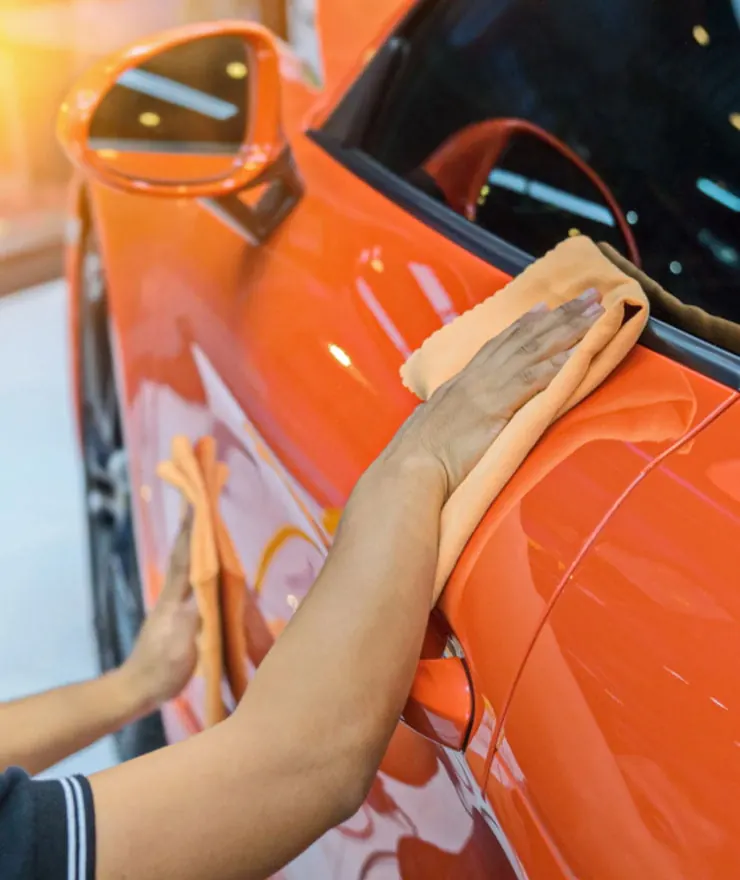
Fine circular scratches and a dull haze sit in the clear coat, the top layer of the paint. A coating job removes them by polishing, along with light scratches and tar spots, before any coating goes on. We polish gloss paint by machine or by hand until the swirls are gone.
Droppings and insect remains baked on
For an E-Class Saloon W213, EU edition, Mercedes-Benz sets insect remover for insect remains and a water soak for bird droppings. Each is rinsed off afterwards. We lift every deposit with the method its type calls for before the coating stage.

Tar spots that survive a wash
Road tar and tree sap take a solvent, not shampoo, to come off the paint. Mercedes-Benz sets a tar remover for tar stains on that W213. We dissolve tar and sap with a solvent made for each, then rinse the panel.
Stone chips on the front
Jaguar asks owners of the XF, EURO edition, to have stone chips, fractures and deep scratches repaired promptly. Bare metal under a chip corrodes quickly. We repair a chip in our body shop before any coating goes on that panel.
Streaks or uneven patches from an earlier coating
Coating residue that cures on the paint shows as a streak or an uneven patch. The coating maker's remedy is to polish the area and apply the coating again. We polish the cured residue off each affected panel, then recoat it.