

Check engine light on
On a Hyundai Tucson, the malfunction indicator lights for a fault in the emission controls, the engine or the powertrain. The light itself names no part.
We trace the stored fault to the part that set it and repair that part.
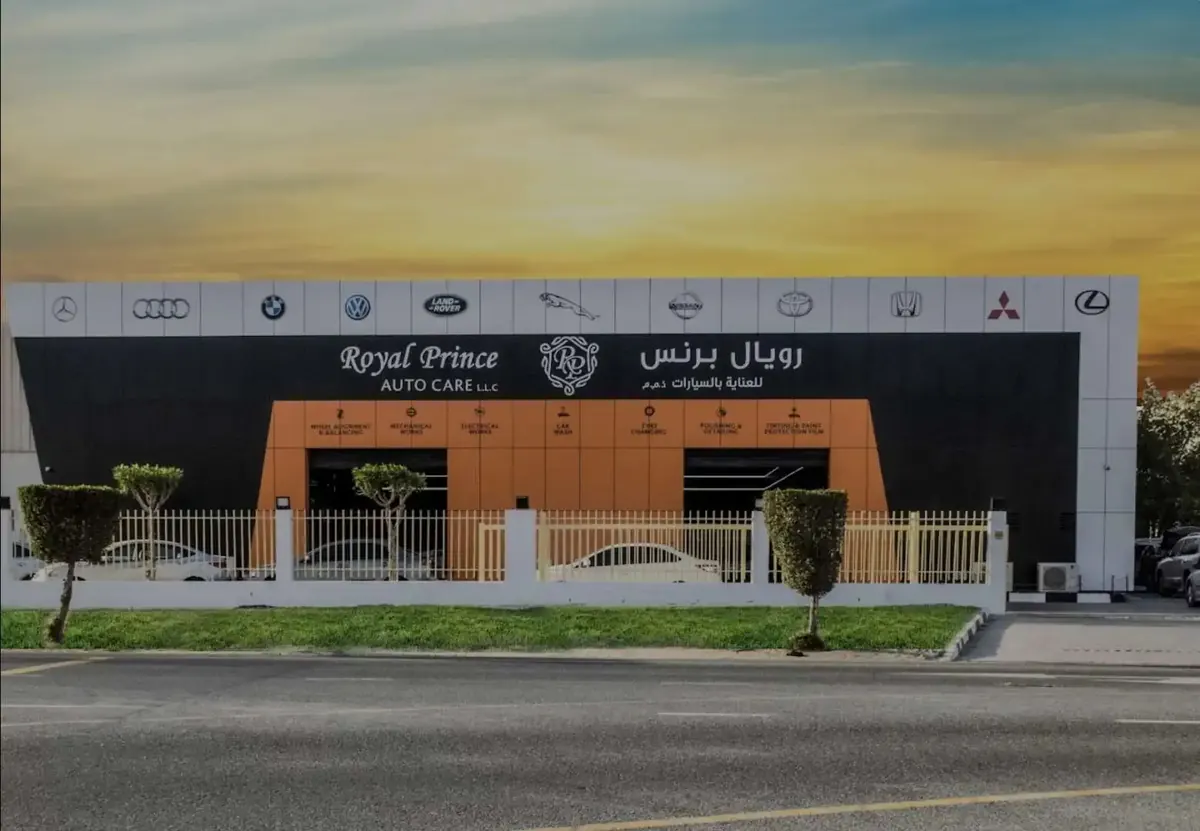
Car engine repair service in Dubai at Royal Prince Auto Care, DIP 2. We repair misfires, smoke, oil loss and timing faults.
Tell us your car, what it needs and how to reach you. A service advisor will call you back to talk through the work.
The work this service covers at our Dubai Investment Park workshop. Open the full details below.
A car engine that needs repair gives 6 signs: the warning light, a misfire, a rattle, coloured smoke, low oil pressure and knocking. Each one leads to a different part of the engine. We trace each sign to the part behind it and repair that part.
On a Hyundai Tucson, the malfunction indicator lights for a fault in the emission controls, the engine or the powertrain. The light itself names no part.
We trace the stored fault to the part that set it and repair that part.
A misfire is a cylinder that fails to fire. Carbon and oil deposits on a spark plug conduct the high voltage to earth, so no spark crosses the gap. A weak ignition coil causes the same misfire.
We test the plug, the coil and the injector of the cylinder that misfires, then replace whichever fails.
Clicking or rattling while driving is the classic sign of a stretched timing chain, and it can bring up the engine light too.
We replace the chain, the tensioner, the tensioning rail and the slide rail together as one set.

Blue smoke while the oil level drops puts the turbocharger under suspicion. Black smoke means the engine gets too little air for its fuel, so the mixture runs rich. On a diesel Hyundai Tucson, white smoke can come from fuel above 50 ppm sulphur.
We match the colour to its source and repair the rings, the turbocharger, the air supply or the fuel fault behind it.

When oil pressure falls in a Hyundai Tucson, its enhanced engine protection limits engine power. Hyundai warns that a Tucson engine kept running after the oil pressure light comes on can suffer severe damage.
We find why the pressure fell and repair the fault that lowered it.

Knocking is abnormal combustion, and the burn runs about 10 times faster. The pressure then rises by up to 300 bar per crank angle degree, against 3 to 5 bar in normal running.
We find which cause sets the knock off, from the fuel to the intake air temperature, and correct it.
Each job below targets one part of the engine:
These 9 jobs make up our car engine repair service in Dubai, on petrol and diesel engines. A new timing belt goes in with its tensioner, and with the water pump wherever the belt drives that pump.
Car engine failure in Dubai has 6 causes: old or low oil, dust in the intake, short trips, overheating, knock and crankcase pressure. Each one attacks a different part of the engine, from the spark plugs and the turbocharger to the pistons, rings and valves.
Dubai's mean daily maximum climbs to 41.9 °C in August, and the airport station has logged 48.8 °C. That is the air an engine breathes and sheds its heat into all summer.
We check the oil and the crankcase ventilation on every engine we diagnose, and replace the part that has failed.
Royal Prince Auto Care repairs the cause of an engine fault along with the part it damaged. These are the results a driver gets from that approach.
On a petrol Hyundai Tucson, a lit malfunction indicator can mean catalytic converter damage and a loss of engine power. A fault repaired early spares the converter.
Piston rings that are broken, stuck or wrongly fitted leave a gap between the combustion chamber and the crankcase. Rings that seal keep the oil below them, so the level holds between changes.
Stuck or carbonised EGR valves are the most common cause of EGR faults, and they bring irregular idling, jerking and a lack of power. A working valve ends all 3.
On a diesel Hyundai Tucson, 100 km with the malfunction indicator blinking can damage the particulate filter and worsen fuel consumption. A cleared fault keeps fuel use at its normal rate.
Fuel that reaches the crankcase lowers the viscosity of the oil and weakens its detergency. With the fuel kept out, the oil keeps the film and the cleaning power it was made for.
The RTA periodic test checks exhaust emissions, and a private car needs a pass to renew its registration. An engine with its emission fault repaired goes into that test without it.
Direct-injection petrol engines build carbon on their intake valves because no fuel washes over the valves, as it does in a port-injected engine. The deposits are a mix of engine oil, wear particles, unburned fuel and exhaust gas, and they build up steadily over time.
Heavy deposits disturb combustion, make the engine run unevenly and can make valves stick or cause engine failure. Removal is mechanical, and the deposits form again afterwards.
We remove the carbon from the intake valves of direct-injection engines by mechanical cleaning.
A replacement turbocharger fails again when the fault that ruined the first one is still there. Oil starvation sits high on the list of turbocharger failure causes, and in small units the shaft turns at up to 300,000 rpm. A lasting repair depends on finding and removing that cause.
A clogged or carbonised oil return pipe and an engine oil level that is too low both starve the turbocharger of oil.
We find why the old unit failed and correct that fault. The new turbocharger is fitted along with a new air filter and a new charge air cooler, and we renew the oil and oil filter.
Our engine diagnosis moves from the driver's account to the road test in 6 steps.
We log the engine speed, the air temperature outside, the engine temperature and the warm-up time at which the fault shows. Those conditions decide which test comes next.
We read the stored fault codes and the live engine values with a diagnostic tester. A sensor or part that the data proves faulty is replaced at this stage.
On the 2.0 litre petrol Saab 9-5, Saab sets the weakest cylinder at no less than 70 per cent of the strongest. No cylinder reads below 690 kPa. A weak cylinder then gets about 15 ml of oil through the spark plug hole for a second reading.
On that Saab, low readings on 2 neighbouring cylinders that oil does not raise point to a head gasket leaking between them. Saab's minimum for the 4-cylinder diesel 9-5 is 2,600 kPa, tested dry, because oil in a diesel cylinder can cause extensive engine damage.
We then repair the part the readings point to.

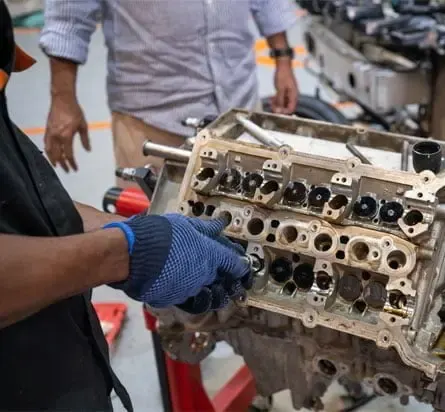
We feed air into each cylinder and trace where it escapes. The escape point leads us to the valve, ring or seal at fault, which we then repair.
The intake first goes under pressure with no smoke while we watch the flow meter and the pressure decay. A falling pressure gets a short burst of smoke to show where the air leaks, and we replace the hose or seal at that spot.
On the road we recreate the conditions the fault appeared in. Afterwards the oil and coolant levels get a fresh check, and we look over the joints for leaks.
Call or WhatsApp us with the warning or noise your engine shows to book a diagnosis.
The cost of a car engine repair service in Dubai depends on 4 factors. The first 2 are how far the damage has spread and the parts replaced as a set. The others are the dismantling needed to reach the fault and the engine type.
Turbocharged, direct-injection and diesel engines add parts and tests that a simple petrol engine does without. Our test results show which of the 4 factors apply to your engine.
Send the make, model and engine of your car by WhatsApp to book the diagnosis.
Our car engine repair in Dubai rests on test results and on the specifications each car's maker publishes.
We replace a part after a test has shown it to be faulty. A part fitted on a guess leaves the real fault in place.
Fresh plugs stop a fouling misfire for a time, and the deposits return while their cause remains. Oil fouling means oil is reaching the combustion chamber, so we repair that oil path as well as fitting new plugs.
We fit plugs of the heat range the car's maker lists and tighten them to the stated torque. A plug tightened too little can lose compression and overheat.
A failed EGR valve gets a new replacement from us, never a clean. Oil in the intake air, from a crankcase ventilation fault, is what carbonises these valves.
We fill the engine oil the car's maker specifies and add nothing to it. Hyundai tells Tucson owners never to put additives in the engine oil.

Petrol and diesel engines on every make we service come to the same independent workshop, in Dubai Investment Park 2.
A car engine in Dubai lasts longer with 4 habits. Change the oil on the severe-use schedule, keep the air filter clean, drive gently from cold and add longer drives between short trips. Dubai averages 17.7 days of rising sand annually, and the air filter stands between that sand and the engine.

For the Tucson, Hyundai counts heavy traffic, long idling, stop-and-go driving and heavy dust as severe use. On its Smartstream G1.6 T-GDi engine, that schedule sets an oil change every 5,000 km or 6 months. We change the oil at the severe-use interval the car's maker lists.
Dust and sand that get into the intake can wreck a turbocharger. Our check of the air filter on each engine ends in a new filter when the old one is clogged or torn.
Hard revving straight after a cold start can strip the oil film inside the turbocharger. Pull away gently and keep the revs low at first.
A spark plug burns off its own carbon once it reaches 450 °C. Hyundai treats repeated Tucson trips under 8 km as severe use, and a longer run lets the plugs reach that temperature.
Tell us the make, model and what the car is doing, and we book it in at our Dubai Investment Park 2 workshop. Free pickup and drop-off by our driver comes with a service contract. Every service comes with a free car wash.
Regular servicing keeps small faults from turning into big repairs. Both packages are carried out by certified technicians using genuine or quality parts.
Each package is quoted for your car. Call +971 50 216 0864 with the make and model for an estimate.
Reviews left on our Google listing, shortened in places for length.
552 Google reviews
Most recent first.
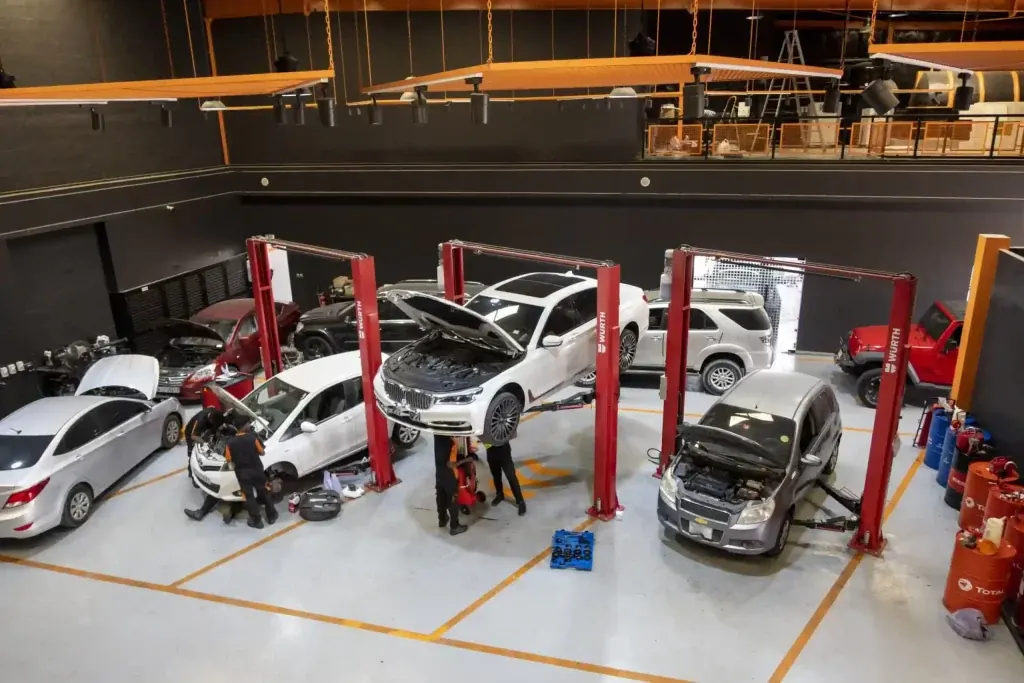
Dubai Investment Park 2. Ramps, a body shop and a detailing bay, all in one place.
No. Hyundai tells Tucson owners not to drive a car that shows signs of engine malfunction, such as a misfire or a noticeable drop in performance. Book a diagnosis, and we trace and repair the fault behind the light.
Yes. We repair diesel engines, including particulate filter faults. On a diesel Hyundai Tucson, short trips and long low-speed driving keep the exhaust cool, so soot can stay in the filter. Its clearing drive holds 1,250 to 2,500 rpm in 2nd gear or above.
Hyundai states that oil use while driving is normal for a Tucson, and that it settles after 6,000 km on a new car. Driving habits, climate and traffic all change the rate. Oil lost through a leak is a separate fault, and we measure consumption on a warm engine.
No. Saab notes that on the B207 engine of the 9-3, an air leak in the intake can cause symptoms without any fault code. We test the intake for leaks when the symptoms point there and the fault memory is empty.
For the Saab 9-3, P0300 is a random misfire. On a misfire code, we test the plugs and coils of the cylinders it names.
Call or send a WhatsApp message with the make, model and year and what the car is doing, and book it in at our Dubai Investment Park 2 workshop.