
Quick Summary
Paint protection film, or PPF, is a clear polyurethane layer that shields car paint from chips, scratches and stains. Quality film is about 0.15 mm thick and can heal light scratches. The film comes off later without harming factory paint. Front-end coverage suits most daily drivers, while full-body film suits high-value cars and desert trips.
Dubai roads throw sand, grit and stone chips at a car's paint every day. Clear coat alone was never built to stop them.
PPF, or paint protection film, is a clear polyurethane layer fitted over painted panels to absorb chips, scratches and stains before they reach the paint.
Quality film is about 0.15 mm thick, can heal light scratches, and comes off later without harming factory paint. Its real value depends on coverage, fitting quality and aftercare, not just the film itself.
How Paint Protection Film Works
The film acts as a sacrificial layer. When a stone hits the bonnet at highway speed, the soft, elastic film absorbs and spreads the impact instead of letting it crack the paint below.
The film fitted at the workshop is 0.152 mm thick, or 0.203 mm with its adhesive layer. That is several times thicker than a typical factory clear coat, which is why it can take hits that would chip bare paint.
Engineers measure chip resistance with the SAE J400 test, which fires gravel at coated panels to copy road debris. Film that passes a standard gravel test like this is built for the grit thrown up on busy highways such as Emirates Road.
| Property | Typical figure | Why it matters |
|---|---|---|
| Material | Clear polyurethane (TPU) with acrylic adhesive | Flexible and absorbs impacts |
| Thickness | 0.152 mm film, 0.203 mm with adhesive | Room to soak up chips |
| Self-healing | Light scratches close at room temperature on some films | Fewer wash marks |
| Removal | Steam or gentle heat | Factory paint stays intact |
| Cure before first wash | 2 days for clear, 3 days for coloured | Adhesive settles fully |
What the Film Is Made Of
Modern film is thermoplastic polyurethane, often shortened to TPU. It is flexible enough to stretch around curves, yet tough enough to resist tearing from a stone strike.
A clear top coat sits over the TPU, and an acrylic adhesive holds the film to the paint. Better top coats resist stains from bird droppings and bug splatter.
Older vinyl films were cheaper but stiffer, and they aged faster in strong sun. TPU film has largely replaced them for paint protection on modern cars.
Self-Healing Top Coats
Self-healing film has a top layer that flows back into shape after light marks. On some films, fine scratches close at room temperature, while others need warmth from the sun or warm water.
This works on wash marks and light swirls, not deep gouges. A cut right through the film still means that panel needs new film.
Coverage Options and What They Protect
Film does not have to cover the whole car. Most owners start with the zones that take the most hits from the road.
Front-End Coverage
Front coverage usually includes the bonnet, front bumper, front wings and mirror caps. These panels face oncoming grit, so they collect chips fastest on highway drives.
It suits daily drivers and new cars on a budget. Headlights can be filmed too, which helps prevent pitting and haze.
Full-Body Coverage
Full-body film covers every painted panel, including doors, roof, sills and rear bumper. It protects against door dings, trolley marks and sand blasting on desert trips.
Film is cut at each panel seam so edges sit neatly, and radar sensor and camera areas are left clear. This keeps parking sensors and driver assistance systems working correctly.
| Coverage | Panels included | Best for |
|---|---|---|
| Partial front | Bonnet edge, bumper, mirrors | Tight budgets, city driving |
| Full front | Full bonnet, bumper, wings, mirrors, headlights | Highway commuters, new cars |
| Full body | Every painted panel | High-value cars, desert trips, long ownership |
How the Film Is Fitted
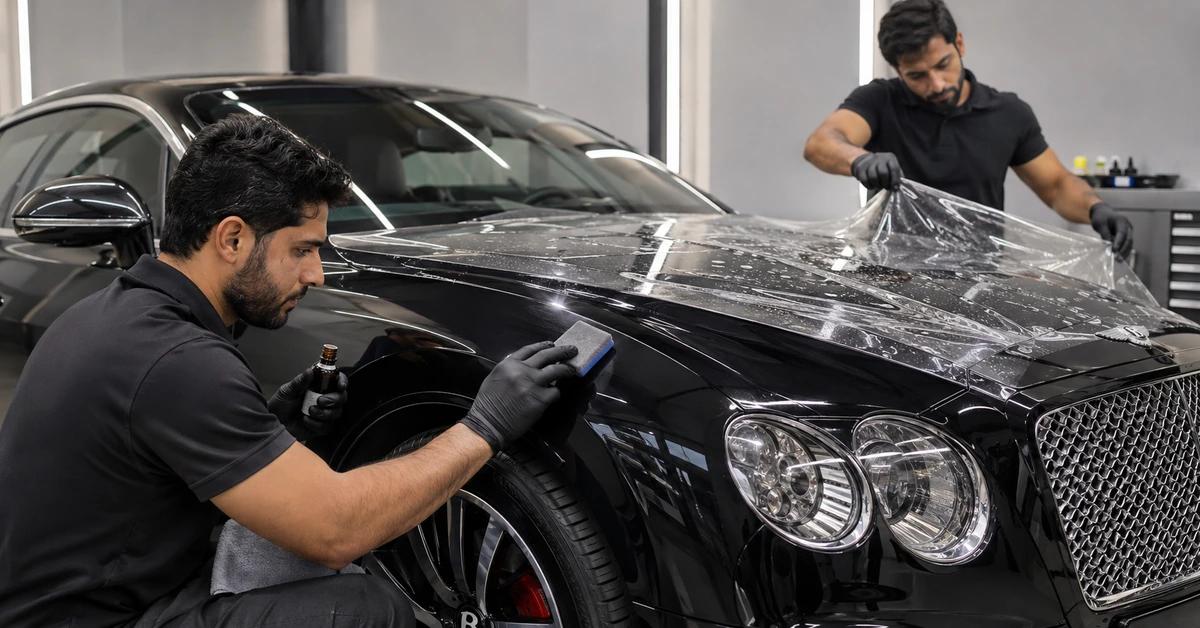
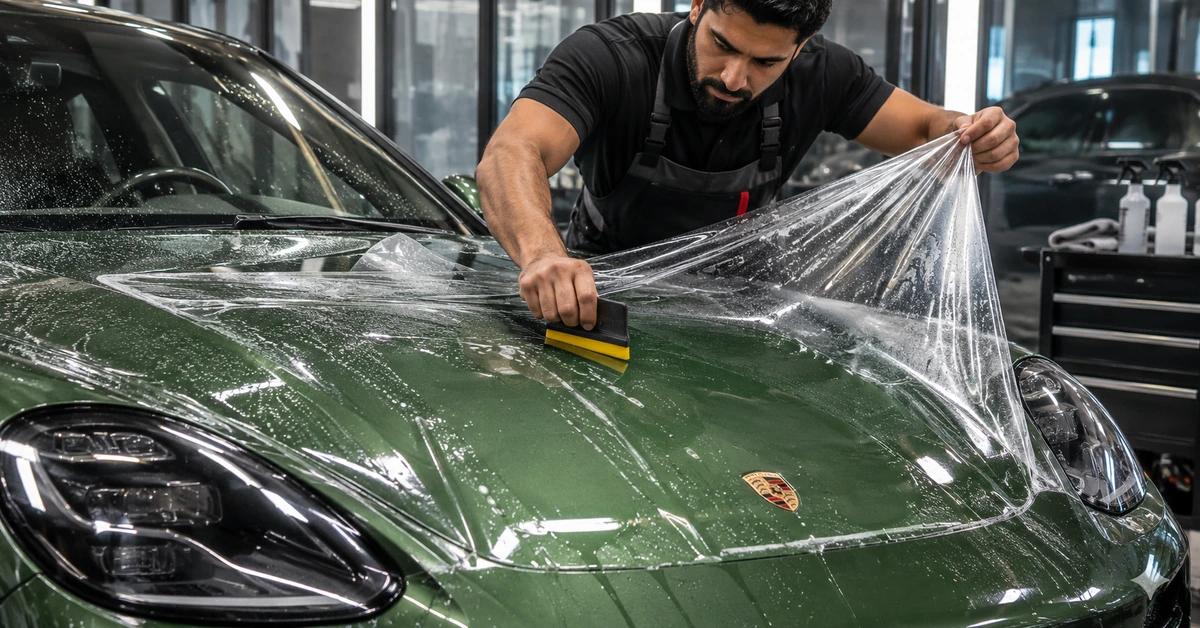
Fitting quality decides how long the film lasts and how invisible it looks. The process starts with a wash and an inspection, and loose paint, dents, rust or blisters are photographed before any film goes on.
Old film is steamed off and pulled back at a low angle so its adhesive comes away with it. Tar, sap, wax and polish are then removed with solvent and a clay bar, and each panel is wiped with 70% isopropyl alcohol and 30% water.
Fitting happens indoors so wind, dust and sun do not spoil the prep. Weak or repainted paint can lift when film is removed later, so a paint check first protects the owner.
Aftercare in Dubai Heat
New clear film should stay unwashed for 2 days, and coloured film for 3 days, while the adhesive settles. Small moisture bubbles can appear early and usually clear as the film cures.
After that, hand wash with a pH-neutral shampoo and keep pressure washer jets away from film edges. Remove bird droppings and bug splatter quickly, as they can stain the top coat in strong sun.
Film also handles heat and sand far better than wax, which wears off within weeks. A ceramic coating can go on top for extra gloss and easier washing.
PPF vs Ceramic Coating vs Window Film
These three products are often confused, yet each solves a different problem. Many cars benefit from more than one.
| Product | Protects against | Form | Main role |
|---|---|---|---|
| Paint protection film | Chips, scratches, stains | 0.152 mm TPU film | Physical shield |
| Ceramic coating | UV fading, stains, dirt | Very thin glass-like layer | Gloss and easy cleaning |
| Window film | Cabin heat and UV | Film on the inner glass | Comfort and interior protection |
Window film in Dubai is limited to 50% visibility on side and rear glass, and illegal tint can bring a AED 1,500 fine. Many paint protection myths come from mixing up these products and what each one can do.
Is Paint Protection Film Worth It in Dubai?
Film makes the most sense on new cars, dark paint and cars driven long distances on highways. It also suits lease cars, since chip-free panels help avoid charges at return.
Price depends on the panels covered, paint condition, old film removal and film type. A paint inspection gives an exact quote for your car.
Older cars with tired paint can still benefit, but they may need polishing first. Film locks in whatever sits underneath, so defects should be corrected before fitting.
Frequently Asked Questions
How long does protection film last in Dubai?
Quality TPU film usually lasts several years, depending on the film grade, parking and care. Cars parked in shade and washed gently keep their film clear for longer. Remove bird droppings quickly to avoid stains.
Can the film be removed without damaging paint?
Yes, film is removed with steam or gentle heat and pulled back slowly. Factory paint stays intact, though weak or repainted areas may lift. The adhesive comes away with the film.
Does paint protection film turn yellow?
Modern aliphatic TPU films are made to resist yellowing under UV. Cheaper or older vinyl films are far more likely to discolour in strong sun. TPU film has largely replaced vinyl for paint protection.
Can you wash a car with film on it?
Yes, once the first 2 to 3 days of curing have passed. Hand wash with a pH-neutral shampoo and keep pressure washer jets away from the edges. Early moisture bubbles usually clear as it cures.
Conclusion
Paint protection film is the closest thing to armour that a car's paint can wear. In a city of sand, grit and fast highways, that armour earns its place.
PPF is a clear polyurethane layer about 0.15 mm thick that absorbs chips, light scratches and stains. Front-end coverage protects the panels that take the most hits, while full-body film covers everything from doors to roof. Careful fitting, sensor clearance and gentle aftercare decide how long it lasts.
Royal Prince Auto Care fits paint protection film indoors at its Dubai Investment Park 2 workshop after a full paint check. Ask for a paint inspection and quote on PPF and tinting for your car.
Written by the team at Royal Prince Auto Care, Dubai Investment Park. Questions about your car? Get in touch.