
Quick Summary
Range Rovers overheat in the UAE mainly because of coolant leaks and worn cooling parts. Common causes are cracked coolant pipes, worn water pumps or belts, clogged radiators, fan or thermostat faults, and old coolant. Long idling with the AC on full and towing in peak heat make small faults worse. Weekly summer coolant checks and early leak repair prevent most cases.
A Range Rover is built to cross deserts, yet its cooling system still has limits. UAE summers push those limits harder than almost anywhere else.
Range Rovers overheat in the UAE mainly because of coolant leaks from pipes and elbows, worn water pumps or drive belts, sand-clogged radiators, failing fans or thermostats, and low or old coolant. Heavy summer loads, such as long idling with the AC on full or towing in peak heat, turn small weaknesses into warning lights. Regular cooling checks, early leak repair and the right coolant prevent most of these failures.
Heat, Load and the Numbers Behind It
Dubai desert summers can reach 48 to 50°C, and Jaguar Land Rover treats fast driving in air above 50°C as arduous use. Under that rule, the next service may need to come forward.
Recall data shows how quickly a cooling fault turns serious. In a 2023 NHTSA safety recall, Land Rover said the water pump pulley drive belt on certain 2018 to 2022 Range Rover and Range Rover Sport plug-in hybrids could detach and let the engine overheat.
An overheated engine in those cars could rupture the coolant elbow pipe and spill coolant in the engine bay. That is why a rising temperature gauge should never be ignored.
| Cause | Warning signs | Typical fix |
|---|---|---|
| Coolant pipe or elbow leak | Sweet smell, damp hoses, low coolant warning | Replace pipe or elbow, pressure test |
| Water pump or drive belt wear | Squeal, coolant near the pump, fast temperature rise | Replace pump and belt |
| Clogged radiator and condenser | Runs hot in traffic, weak AC | Clean or replace radiator |
| Fan or thermostat fault | Hot at idle or soon after start | Replace fan, relay or thermostat |
| Low or old coolant | Warning message, discoloured coolant | Flush and refill with correct coolant |
Common Cooling System Faults
Coolant Pipe and Elbow Leaks
Many modern engines use plastic coolant pipes and elbows that harden after years of heat cycles. Small cracks start as damp spots, then grow into leaks that drain the system.
A sweet smell after driving, crusty residue on hoses or a level that keeps dropping are early signs. These share causes with other coolant leaks, and a pressure test finds them before they strand you.
Water Pump and Drive Belt Failure
The water pump pushes coolant around the engine, and on many engines a belt drives it. A worn bearing, leaking seal or damaged belt cuts coolant flow fast.
Squealing from the front of the engine or drips near the pump are clear warnings. Replacing the pump and belt together often saves a second labour bill.
Sand-Clogged Radiator and Condenser
The AC condenser sits in front of the radiator, so both trap sand, dust and insects. Blocked fins stop air from carrying heat away, especially in slow traffic.
Running hot in traffic while staying normal on the highway is a classic sign. Cleaning or a radiator replacement restores the airflow.
Fan and Thermostat Faults
Electric cooling fans pull air through the radiator when the car is slow or stopped. A failed fan motor or relay lets temperatures climb at traffic lights.
A thermostat stuck closed stops coolant from reaching the radiator at all. It often shows as a fast temperature rise soon after starting.
Low or Old Coolant
Coolant loses its corrosion inhibitors over time, even when the level looks fine. Land Rover lists coolant renewal about once a decade on the Range Rover, Range Rover Sport and Evoque, but leaks and wrong top-ups shorten that.
Mixing coolant types can form sludge that blocks thin radiator tubes. Use only the type the maker specifies.
Warning Signs Not to Ignore
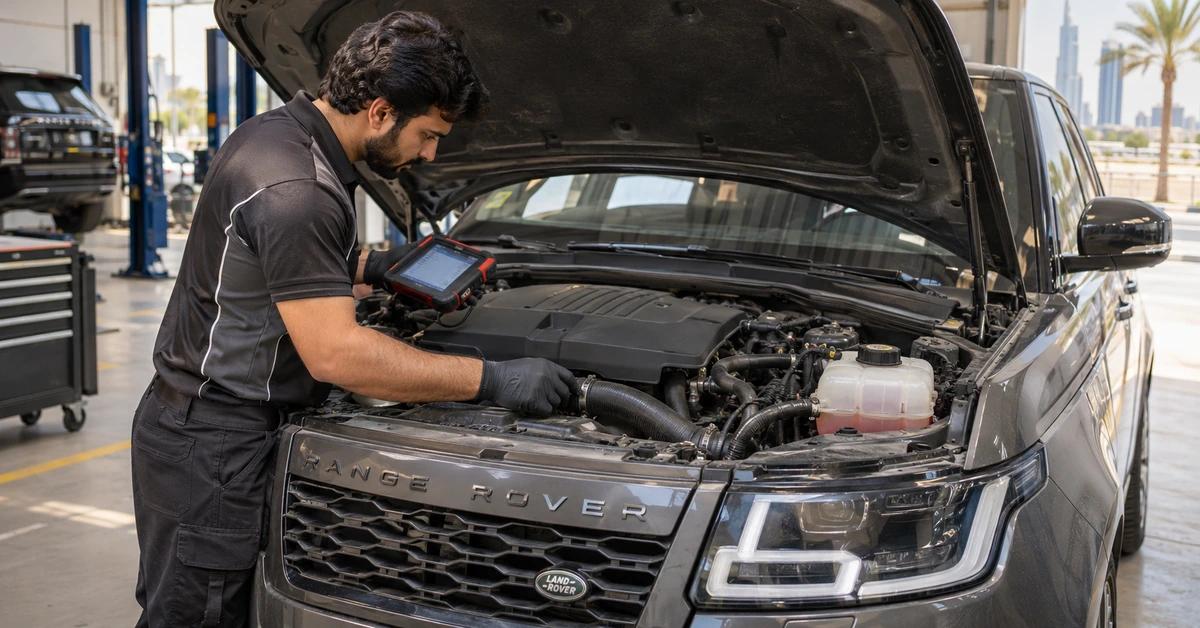
Range Rovers show cooling faults through the temperature gauge, coolant warnings and messages on the display. Steam from under the bonnet, a sweet smell or weaker AC also point to trouble.
If a warning appears, pull over safely, switch off and let the engine cool. Never open a hot expansion tank cap, because pressurised coolant can scald.
Some overheating myths suggest driving gently to a garage is fine. In reality, running hot can warp the cylinder head and blow the head gasket, which costs far more than a hose or pump.
How to Prevent Overheating in UAE Summers
Check the coolant level weekly in summer with the engine cold. A level that keeps falling means a leak, even if no puddle shows.
Have the radiator and condenser cleaned before summer, especially after desert drives. Ask for a cooling system pressure test at each major service.
Watch for recall work too, as several cooling-related campaigns exist for recent models. A Land Rover dealer handles recall repairs, while a specialist workshop can check everything else.
Driving Habits That Help
Avoid long idling with the AC on full in midday heat where you can. Towing or carrying heavy loads in summer should come with extra temperature checks.
Park in shade or covered parking whenever possible. A cooler engine bay at start-up eases the load on the whole system.
Frequently Asked Questions
Is it safe to drive a Range Rover that is running hot?
No, drive only as far as you need to stop safely. Running hot can warp the cylinder head and damage the head gasket within minutes. Pull over safely, switch off and let the engine cool.
How often should Range Rover coolant be checked in the UAE?
Check the level weekly in summer and monthly in cooler months. Have the whole cooling system inspected at every major service. A level that keeps falling means a leak, even if no puddle shows.
Why does my Range Rover overheat only in traffic?
Trouble at low speed usually points to a weak cooling fan or a clogged radiator and condenser. On the highway, strong airflow hides the problem. Cleaning the radiator and condenser restores the airflow.
Can I top up with water in an emergency?
Plain water can get you to a workshop in an emergency, but it has no corrosion protection. Flush and refill with the correct coolant as soon as possible. Never open a hot expansion tank cap.
Conclusion
A Range Rover's cooling system works hardest exactly when UAE drivers need it most. Small leaks and tired parts rarely stay small in summer traffic.
Coolant pipe leaks, water pump and belt wear, clogged radiators, fan or thermostat faults and old coolant cause most cases. Recall data shows how one failed belt can lead to serious engine damage. Weekly summer checks, early leak repair and correct coolant stop most Range Rovers from overheating.
Royal Prince Auto Care reads every control module, pressure tests the cooling system and repairs leaks at its Dubai Investment Park 2 workshop. Ask for a full cooling check with your Range Rover service before peak summer arrives.
Written by the team at Royal Prince Auto Care, Dubai Investment Park. Questions about your car? Get in touch.