
Quick Summary
Engine diagnostics matter because luxury cars run on many linked control units. One fault can set warnings in several systems at once. A diagnostic reads every module, traces each code to its real cause and confirms the repair with a road test. That saves money on wrong parts and keeps safety systems working.
A modern luxury car is a rolling network of computers, and most of its faults start as data before they become noises. Reading that data correctly is now the first step of almost every repair.
Engine diagnostics are critical because luxury cars rely on many linked control units, so one fault can trigger warnings in several systems at once.
Proper diagnostics find the true root cause, stop wrong parts from being fitted, catch problems early and keep safety systems working. They also matter for software updates, coding new parts and confirming that a repair really worked.
The Numbers Behind Modern Car Electronics
For years, carmakers have relied on a patchwork of electronic control units, often more than a hundred per car, as Mobileye notes. Each unit runs its own software and talks to the others across the car's network.
Software has grown just as fast. Chip design firm Synopsys estimates that modern vehicles carry around 300 million lines of code, and predicts 600 million by 2027.
Early engine computers ran on just thousands of lines. That jump explains why a simple code reader no longer tells the full story.
| Item | Older cars | Modern luxury cars |
|---|---|---|
| Control units | One or a few | Often more than 100 |
| Lines of code | Thousands | Around 300 million |
| Fault memory | Engine only | Engine, gearbox, chassis, body, safety |
| After a repair | Mechanical fit | Often coding or software update |
What a Proper Diagnostic Involves
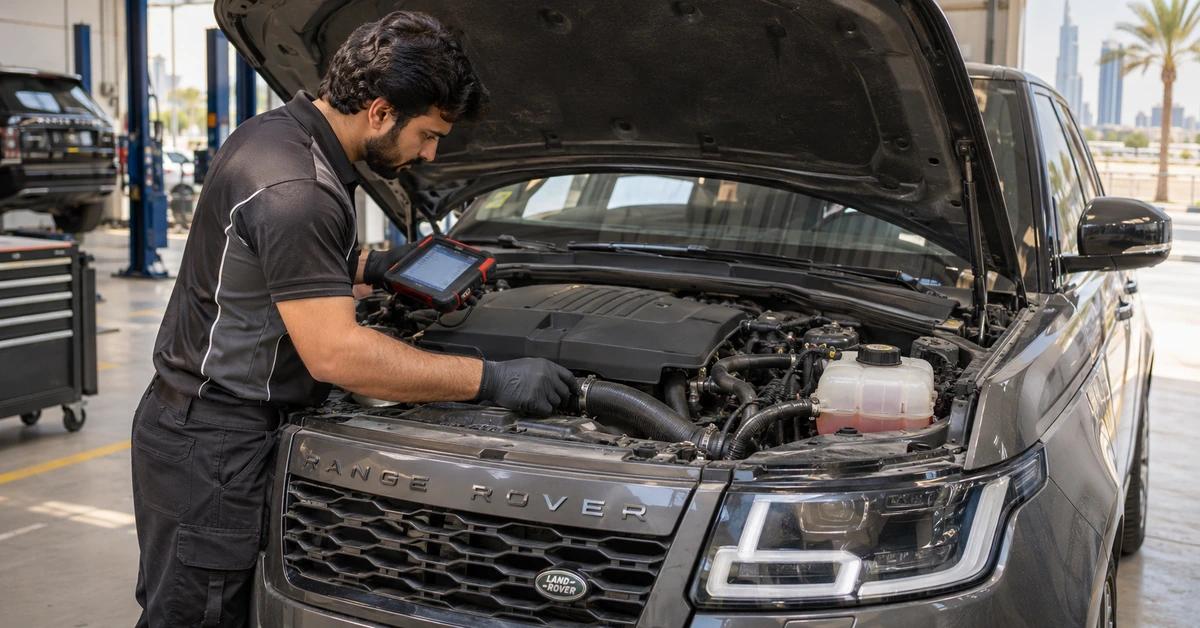
A full diagnostic is much more than plugging in a scanner. It starts by recording the exact warning message and when it appears, such as on a cold start or at highway speed.
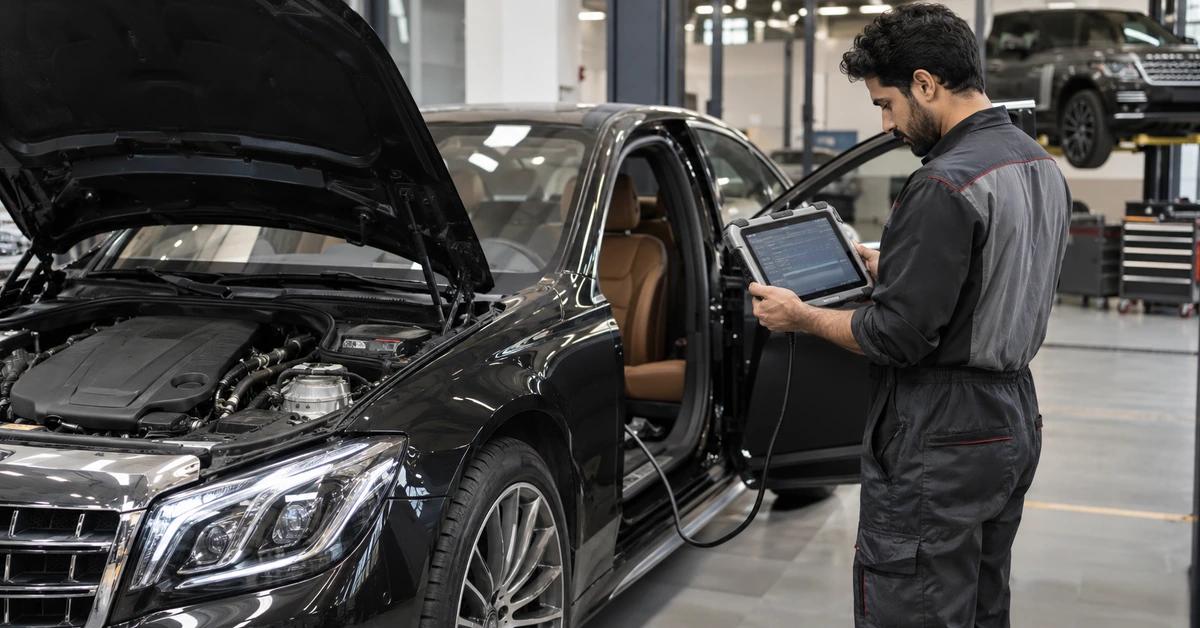
Next, every control module is read for stored faults and service reminders, not just the engine unit. Each code is then traced to the part, wire or software behind it.
After the repair, codes are cleared and the car is road tested under the same conditions noted at intake. That final test proves the fault is fixed, not just hidden.
Live Data and Guided Tests
Live data shows sensor readings while the engine runs, such as fuel trims, coolant temperature and boost pressure. Comparing them with expected values reveals faults that have not stored a code yet.
Guided tests can switch parts like fans, valves and pumps on and off. This proves whether a part works before money is spent replacing it.
Mechanical Checks Still Matter
Software points to the area, but tools like compression testers, smoke machines and pressure gauges confirm the cause. A misfire code, for example, can come from a coil, injector, vacuum leak or worn valve.
Knowing the common causes of engine misfires helps, but only testing shows which one applies. That is where scan data and hands-on checks work together.
Why Guesswork Costs More on Luxury Cars
Luxury car parts are expensive, and fitting the wrong one wastes money without fixing anything. A sensor fault can look like a failed part when the real cause is a damaged wire or weak battery.
Many modern parts also need coding to the car after fitting. Batteries, injectors and some control modules must be registered, or the car may not run correctly.
Low voltage alone can set false codes across several systems. Testing the 12V battery, the charging system and the 48V system on mild hybrids first avoids chasing ghosts.
Problems Diagnostics Catch Early
Many serious faults show up in data long before the driver notices anything. Rising fuel trims, slow sensor responses or stored misfire counts often point to trouble weeks in advance.
| Early sign in the data | Possible cause | Cost if ignored |
|---|---|---|
| Rising misfire counts | Coils, plugs, injectors | Catalytic converter damage |
| Unstable coolant temperature | Thermostat, water pump | Overheating, head gasket failure |
| High long-term fuel trim | Vacuum leak, airflow sensor | Poor economy, rough running |
| Gearbox adaptation faults | Fluid, solenoids | Harsh shifts, gearbox repair |
| Low voltage events | Battery, alternator | False warnings, no-start |
Catching these early turns a large repair into a small one. That is the strongest reason to scan a car before problems grow.
Dashboard Warnings You Should Never Ignore
A flashing check engine light usually means a severe misfire that can damage the catalytic converter. A steady light still needs a scan soon, even if the car feels fine.
Gearbox, coolant temperature and oil pressure warnings call for stopping as soon as it is safe. Driving on can turn a sensor fault into an engine or gearbox rebuild.
Even warnings that come and go are worth checking. Stored codes stay in memory and give technicians clues long after the light goes out.
When to Book a Diagnostic Check
A scan makes sense at every service, after any warning light and before buying a used luxury car. It also helps after flood exposure or major electrical work.
A standard diagnostic check usually takes about 90 minutes. That is little time compared with the days lost to guesswork repairs.
Keep the report from each scan with your service records. Over time, it builds a picture of how the car is ageing.
Frequently Asked Questions
Can a basic OBD scanner diagnose a luxury car?
A basic scanner reads generic engine codes, but it cannot see most body, chassis or gearbox modules. Luxury cars need brand-level tools to read every system and run guided tests.
Does clearing a fault code fix the problem?
No, clearing a code only hides the warning until the fault returns. The cause must be found and repaired first. After the repair, the car is road tested to prove the fault is fixed.
How long does an engine diagnostic take?
A standard check takes about 90 minutes on most cars. Intermittent or electrical faults can take longer, as they may need extra road tests. Keep the report with your service records.
Should I get a diagnostic before buying a used car?
Yes, a full scan shows stored faults that a seller may have cleared recently. It works best alongside a full pre-purchase inspection. A scan also makes sense at every service and after any warning light.
Conclusion
Luxury cars have become as much software as steel. Fixing them well now starts with reading what the car already knows.
With over a hundred control units and hundreds of millions of lines of code, one fault can ripple through many systems. Proper engine diagnostics trace each code to its true cause, catch problems early and confirm repairs with a road test. That saves money on wrong parts and keeps safety systems working as designed.
Royal Prince Auto Care reads every control module and traces each fault to a repair at its Dubai Investment Park 2 workshop. Ask for a full scan with your next engine repair or service visit.
Written by the team at Royal Prince Auto Care, Dubai Investment Park. Questions about your car? Get in touch.