Record the complaint
We note whether the steering feels heavy, loose or noisy, whether the car pulls, and whether a warning shows. We also note when the fault appears: at parking speed, on the open road or after a kerb strike.
Read the fault codes
On electric and electro-hydraulic systems, we read the stored codes from the steering control unit. We then repair the fault that each code names.

Check the play with the engine off
With the car standing and the engine off, we turn the steering wheel to feel for excess play. We check the linkage for bends and the joints for damage, then replace each damaged part.
Inspect the rack and boots on the lift
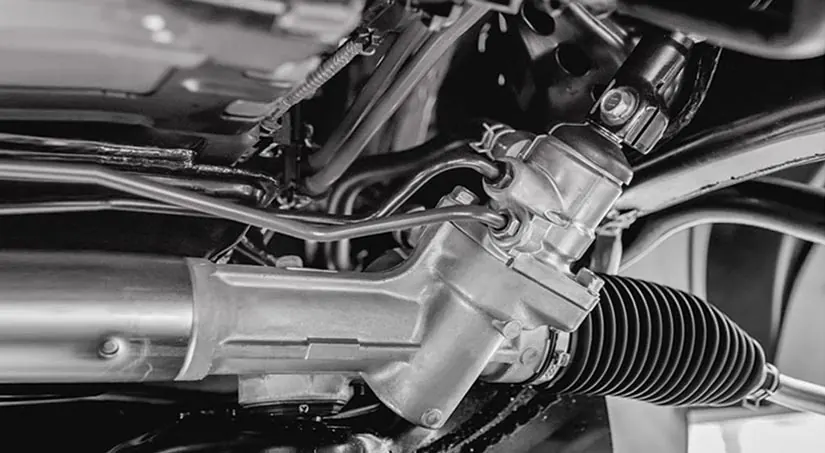
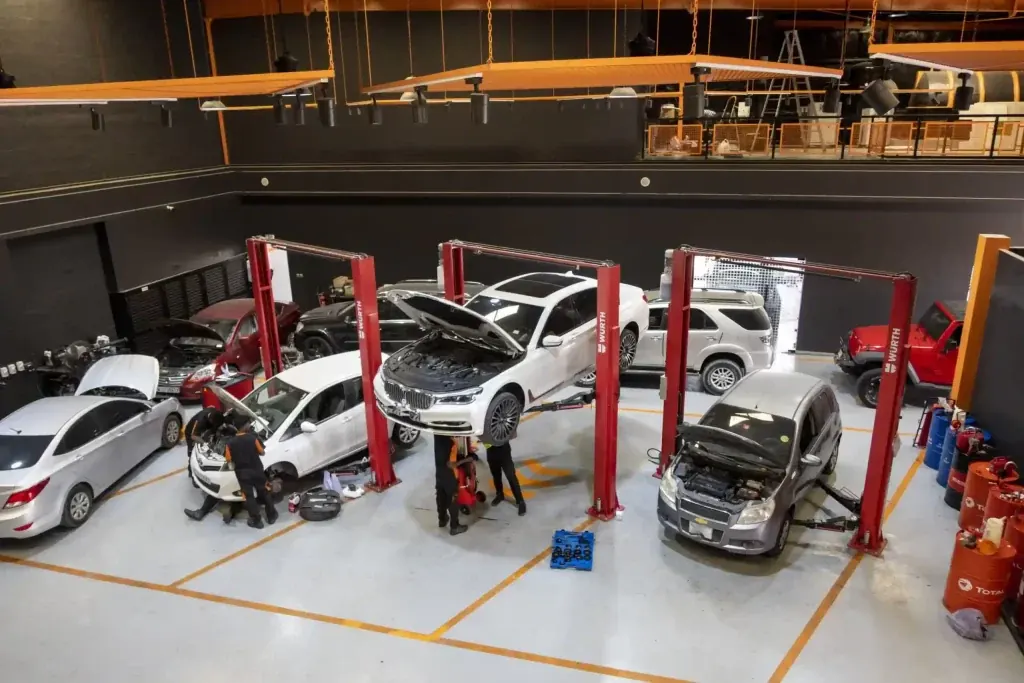
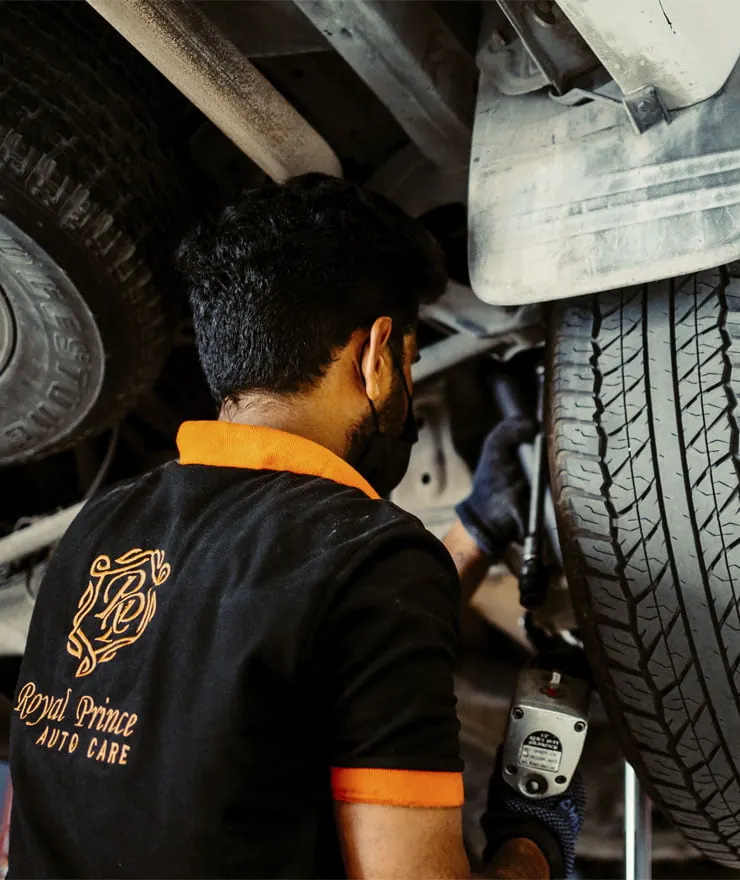
On the lift, we check the steering gear, both boots and the clamping rings on the tie rods. A boot with even a small tear is replaced at once, and a rusted clamping ring is renewed.
Replace the part and bleed the system
A new hydraulic rack goes in after a flush with clean fluid, with the speed or flow sensor moved over from the old unit. We bleed the system lock to lock with the wheels off the ground, and fill the reservoir no higher than its mark. Air left inside makes a rumble, so we bleed until it stops.
Align the wheels and road test
Once a new rack is in, we set the steering geometry to the car maker's figures. A road test then confirms the car runs straight, quietly and with even effort. Where the maker requires camera or radar recalibration after steering work, the car goes to its dealer for it.
Book a steering check by phone or WhatsApp, and name the symptom you feel at the wheel.