
Quick Summary
Replacing a control arm means removing the worn arm and fitting a new one to factory torque specs. A wheel alignment must follow right away. Clunking over bumps, steering vibration and uneven tyre wear are the main warning signs. UAE heat, speed bumps and sand wear control arms faster, so drivers here should check them often.
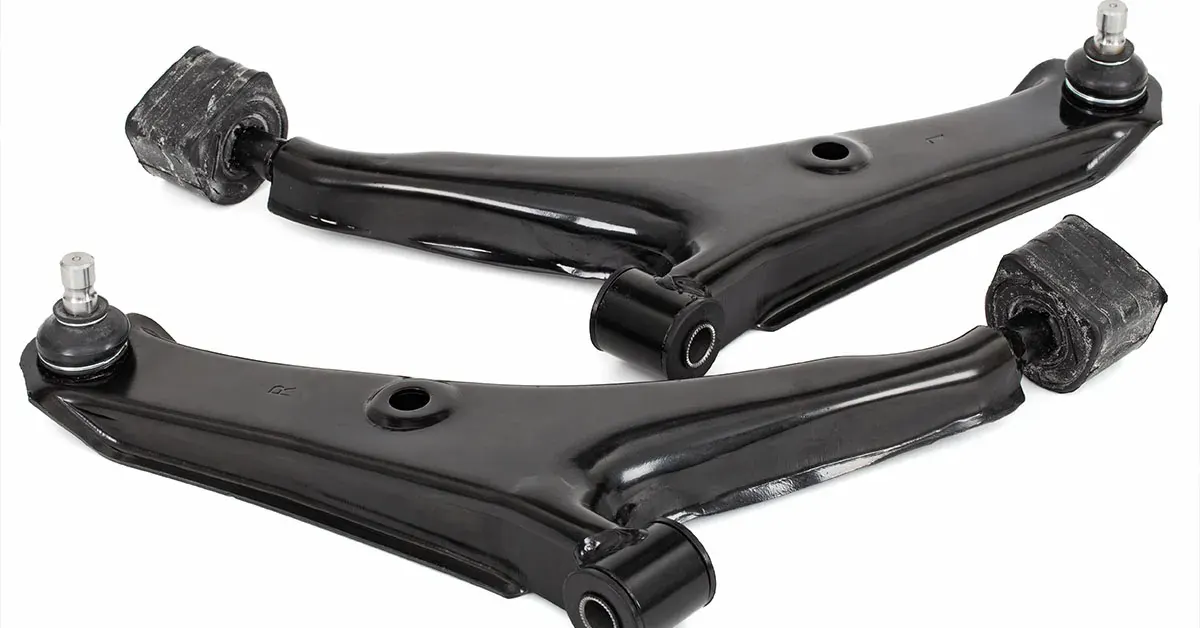
A control arm links the wheel hub to the car's frame. It lets the wheel move up and down while staying aligned. Each arm has bushings and sometimes a ball joint, and when these fail the whole arm often needs replacing.
To replace a control arm, lift and secure the car, remove the wheel and disconnect the ball joint. Then unbolt the old arm, fit the new one and torque it to factory specs. Always get a wheel alignment right after the job.
Steps to Replace an Upper or Lower Control Arm
You will need a jack, jack stands, a socket and wrench set and a breaker bar. A ball joint separator, a torque wrench and penetrating oil complete the kit. The job needs strength, precision and correct torque values.
Step 1: Prepare the Vehicle
Park on level ground and engage the parking brake. Loosen the wheel nuts slightly before lifting the car.
Step 2: Lift and Secure the Car
Raise the car with a jack and support it on jack stands. Never work under a car held only by a jack. Then remove the wheel.
Step 3: Locate the Control Arm
Find the upper or lower control arm that joins the wheel hub to the frame. Confirm which arm is worn before removing anything.
Step 4: Disconnect the Ball Joint
Use a ball joint separator to release the joint carefully. Avoid damaging nearby parts such as the brake lines.
Step 5: Remove the Mounting Bolts
Spray penetrating oil on tight bolts and let it soak in. Then remove the bolts that hold the control arm to the chassis.
Step 6: Install the New Control Arm
Position the new arm correctly. Hand-tighten the bolts first, then torque them to the maker's specs.
Step 7: Reconnect the Ball Joint
Secure the ball joint and make sure it is fully seated.
Step 8: Refit the Wheel and Lower the Car
Put the wheel back on, lower the car and torque the wheel nuts to spec.
Signs Your Control Arm Needs Replacement
A worn control arm affects handling and safety. Watch for these common symptoms:
- Clunking over bumps: A knocking or clunking sound over speed bumps often points to worn bushings or ball joints.
- Steering wheel vibration: A loose arm lets the wheel shake, and you feel that movement through the steering wheel.
- Uneven tyre wear: A worn arm changes the wheel angle, so the tyres wear faster on one edge.
- Pulling or loose steering: The car may drift to one side or feel unstable and vague when you steer.
Heat in the UAE dries out rubber bushings, while speed bumps, rough roads, dust and sand wear the joints faster. Our guide on detecting suspension problems explains other faults to rule out.
Why Wheel Alignment Is Needed After Replacement
A new control arm changes the suspension geometry. Without a wheel alignment, the car may handle poorly, pull to one side and wear its tyres quickly. Alignment should be done right after the repair. Learn more about the signs your wheels need alignment.
DIY replacement may look cheaper, but mistakes are costly. Wrong torque settings, damaged suspension parts and unsafe handling are common results. A professional workshop fits the arm, runs safety checks and aligns the wheels in one visit.
Have the control arms checked every 40,000 to 60,000 km and during routine suspension service. Check them sooner if steering or noise problems appear.
What Affects the Cost of Control Arm Replacement
| Factor | How it changes the cost |
|---|---|
| Vehicle make and model | Luxury cars and SUVs have more complex suspension designs |
| Upper or lower arm | Lower arms carry more load and often cost more |
| OEM or aftermarket parts | Part quality and brand change the price |
| Labour time | Seized bolts and complex layouts take longer |
Upper arms mainly affect steering angles, while lower arms carry more load and affect ride comfort. Lower arms often fail sooner because of this extra stress. A worn arm can also strain the tyres, brakes and steering, so these may need checks too. The exact price needs an inspection and a quote for your car.
Frequently Asked Questions
Does the lower control arm wear out faster than the upper one?
Yes, lower control arms often fail sooner than upper arms. They carry more load and affect ride comfort, so they face more stress. Upper arms mainly affect steering angles and usually wear more slowly.
Can I replace a control arm myself?
Yes, you can, but the job needs strength, precision and correct torque values. You need a jack, stands, a torque wrench and a ball joint separator. Mistakes can cause unsafe handling and damaged parts.
Why does my car clunk when going over bumps?
A clunk over bumps is a common sign of a worn control arm. The bushings or ball joint inside the arm may have failed. An inspection confirms whether the arm is at fault.
How often should control arms be inspected?
Inspect control arms every 40,000 to 60,000 km and during routine suspension service. Have them looked at sooner if you notice steering problems or new noises. Early checks catch worn bushings before tyres suffer.
Conclusion
Replacing a control arm means lifting the car, freeing the ball joint, swapping the arm and torquing the bolts. A wheel alignment must follow straight away. Precision matters, because a poor fit causes serious handling problems.
For safe fitting and alignment in one visit, book car suspension repair at Royal Prince Auto Care.
Written by the team at Royal Prince Auto Care, Dubai Investment Park. Questions about your car? Get in touch.