
Quick Summary
Extreme heat and cold both shorten a car battery's life and weaken its starting power. Heat makes battery fluid evaporate faster and speeds up self-discharge. Cold slows the chemical reactions inside the battery. Drivers in hot climates can protect their battery with shade, clean terminals, correct fluid levels, and regular testing.
Heat makes the fluid inside a car battery evaporate faster. That lowers the battery's capacity and can shorten its life.
Extreme temperatures shorten a car battery's life and weaken its starting power. Heat dries out the electrolyte and speeds up self-discharge, so the battery struggles to hold a charge. Cold slows the chemical reactions inside, which makes the engine harder to start.
How Heat and Cold Affect a Car Battery
Faster Fluid Evaporation
High heat makes the battery electrolyte evaporate more quickly. As the fluid drops, the battery loses overall capacity. This reduces starting power and shortens battery life.
Faster Self-Discharge
Heat speeds up the chemical reactions inside the battery. This raises the rate of self-discharge, even when the car is parked. The battery then struggles to hold a charge, and dead batteries become more frequent. If your car will not start, our guide on a car that clicks but won't start can help.
Extra Load From Accessories
Heavy use of air conditioning and other electrical accessories adds strain in hot weather. The battery has to work harder while heat is already weakening it.
Slower Reactions in Cold Weather
Cold weather slows the chemical reactions inside the battery. Capacity drops, and the engine becomes harder to start.
Higher Internal Resistance in Cold
Cold also raises the battery's internal resistance. The battery becomes less efficient at delivering power, especially when you start the engine.
Battery Care Tips for Hot Weather
Hot weather is hard on batteries, but these battery care habits help them last longer.
- Clean terminals: Clean off corrosion with a mix of baking soda and water to keep power flowing well.
- Fluid level: Fluid evaporates faster in heat, so top up with distilled water when it falls below range.
- Shaded parking: Shade or a battery insulator shields the battery from direct sun and limits heat under the bonnet.
- Lighter load: Use air conditioning and other accessories sensibly, especially with the engine off, to reduce battery strain.
- Test it regularly: A professional battery test finds problems early, so you can plan a replacement before a breakdown.
- Maintainer: If the car sits unused for long periods, a charger or maintainer keeps the battery fully charged.
Signs Your Battery Is Struggling
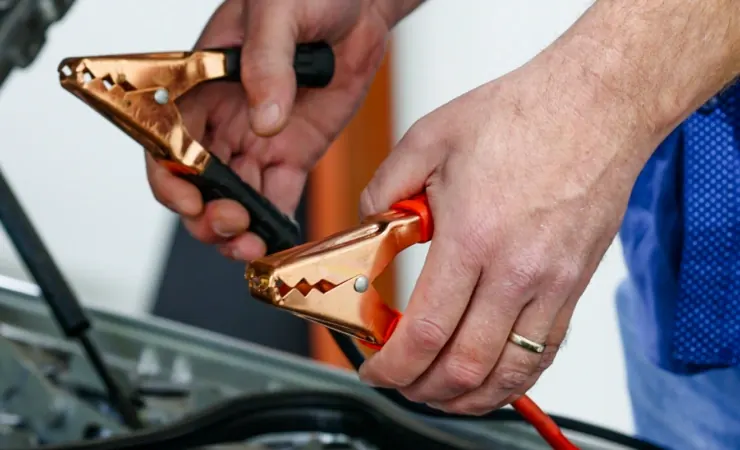
A battery weakened by heat often gives warnings before it fails. The engine may crank slowly or take longer to start. You may need a jump start more often than before. Corrosion may build up on the terminals. Lights and electrical accessories may seem weaker when the engine is off. Frequent dead batteries in summer are a clear warning sign.
If you notice these signs, have the battery tested before it leaves you stranded. Our guide on how to jump-start a dead battery helps if it fails on the road. Always follow the maker's guidance for your battery type and climate.
How a Workshop Tests and Services a Battery
A proper battery service starts with a full inspection. The technician checks the terminals, cables, and connections for corrosion or damage. Diagnostic equipment then measures the battery's voltage and capacity. The charging system is checked too, since a faulty alternator can drain a good battery.
Based on the results, the fix may be charging, cleaning, or a new battery. A replacement should match your vehicle's specifications. After the work, a final test confirms the battery works properly. You should also get advice on simple care to extend its life. Testing before summer is a smart habit in the UAE. It helps you avoid a dead battery at a bad moment.
Frequently Asked Questions
Why does my car battery die more often in summer?
High heat speeds up the chemical reactions inside the battery. This raises the rate of self-discharge, so the battery loses charge faster. Heat also dries out the electrolyte, which lowers capacity.
Should I add distilled water to my car battery?
Yes, if the fluid level is below the recommended range, top it up with distilled water. Fluid evaporates faster in hot weather, so check it regularly. Follow the maker's guidance for your battery type.
How do you clean corrosion off battery terminals?
Clean corroded terminals with a mixture of baking soda and water. Corrosion blocks the flow of power, so removing it helps the battery deliver full strength. Check the cables for damage at the same time.
Does using the air conditioning drain the battery?
Yes, heavy use of air conditioning and other accessories adds strain to the battery in hot weather. Using them sensibly reduces the load. This matters most when the battery is already weak or old.
Conclusion
Extreme heat dries out battery fluid, speeds up self-discharge, and cuts capacity. Cold slows the chemical reactions and makes starting harder. Shade, clean terminals, correct fluid levels, and regular testing help a battery last longer in hot weather.
Get a weak battery tested or replaced with our car battery replacement service at Royal Prince Auto Care.
Written by the team at Royal Prince Auto Care, Dubai Investment Park. Questions about your car? Get in touch.